How are LEGO-compatible bricks made? (Complete Guide 2026)
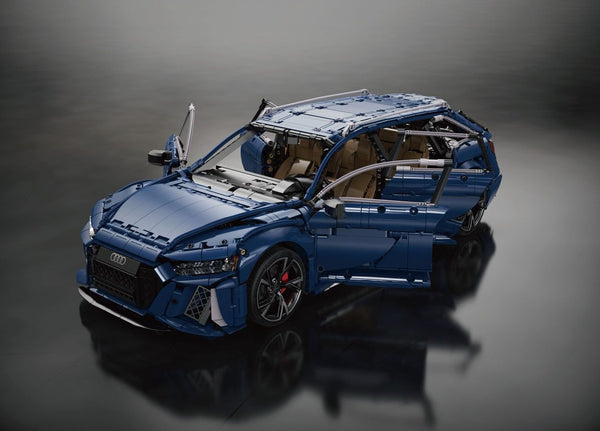
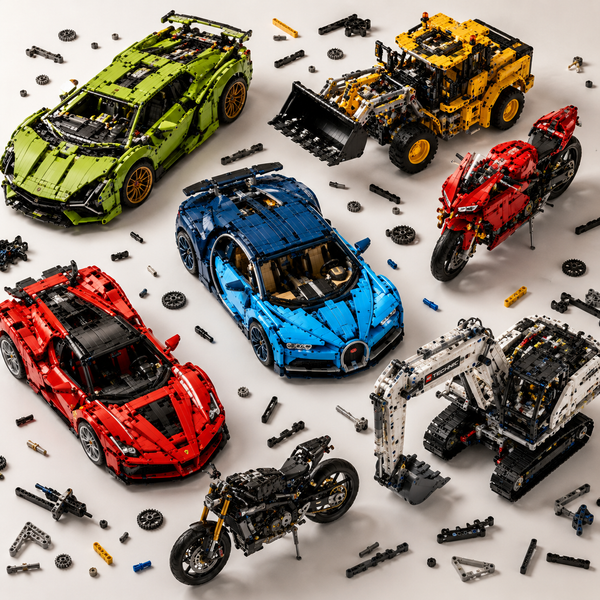
For several years, LEGO-compatible bricks have enjoyed growing popularity among building enthusiasts. Many brands such as CaDA, Mould King, Reobrix, and GULY now offer impressive sets with thousands of pieces and highly advanced technical mechanisms.
These models are often compared to the famous LEGO Technic sets, especially for brick-built cars, supercars, or complex mechanical models.
But one question comes up very often among building brick enthusiasts:
How are LEGO-compatible bricks actually made?
In this comprehensive article, we will explore:
- the materials used to make the bricks
- the industrial manufacturing process
- quality control of parts
- compatibility with LEGO
why some alternative brands are becoming increasingly popular
The plastic used to make building bricks
The majority of modern building bricks are made from a plastic called ABS (Acrylonitrile Butadiene Styrene) .
This material is widely used in industry because it possesses several properties ideal for building bricks:
- high mechanical resistance
- excellent durability
- good heat resistance
- very high precision during molding
Thanks to these characteristics, the bricks can fit together perfectly and remain strong even after thousands of uses.
It is also this plastic that allows LEGO-compatible bricks to have a precise and reliable interlocking system , essential for building complex models like brick cars.
The manufacturing process of LEGO-compatible bricks
The manufacture of building bricks relies on an industrial technique called plastic injection molding .
This process is used in many industries because it allows for the production of extremely precise parts in large quantities.
The manufacturing process usually takes place in several stages.
1. Melting of the plastic
ABS plastic is first heated to a very high temperature until it becomes liquid.
This molten plastic material is then ready to be injected into the molds.
2. Injection into molds
Liquid plastic is injected under pressure into extremely precise metal molds .
These molds are manufactured with a precision on the order of a few microns , which makes it possible to produce perfectly sized bricks.
Each mold corresponds to a specific part:
- classic bricks
- technical parts
- axes
- gears
- bodywork components
3. Cooling and solidification
Once injected into the mold, the plastic cools rapidly and hardens to form the final part.
The brick is then automatically ejected from the mold and sent to the next stage.
Brick quality control
The quality of the bricks is an essential element to ensure a good building experience.
Manufacturers therefore carry out several quality checks to verify that each part meets manufacturing standards.
Among the most important controls:
- checking the dimensions of the bricks
- checking the strength of the plastic
- test of the interlocking force
- visual inspection to detect defects
Some factories also use specialized machines to test the pressure needed to assemble and separate the bricks , in order to ensure a pleasant building experience.
Are LEGO compatible bricks really compatible?
A very frequent question concerns the compatibility between alternative bricks and LEGO .
Most modern manufacturers design their parts to be fully compatible with LEGO bricks .
This means that:
- the dimensions of the bricks are identical
- the interlocking systems are similar
- The parts can be mixed between different brands
This compatibility allows construction enthusiasts to combine several brands in the same model , which opens up a huge range of creative possibilities.
For example, it is possible to use parts from different brands to build:
- Custom brick cars
- complex mechanical models
- original creations
Why alternative brands are becoming increasingly popular
In recent years, alternative brands to LEGO have made enormous progress in terms of quality and innovation.
Today, some brands offer impressive models that are attracting more and more enthusiasts.
Among the main reasons for their success:
Often larger models
Some brands offer 1:8 scale sets, with more than 3000 to 5000 pieces , providing a very immersive building experience.
Original designs
Alternative manufacturers often offer unique models inspired by supercars, racing cars, or futuristic prototypes.
More affordable prices
Alternative sets can sometimes cost two to three times less than some equivalent models.
This allows enthusiasts to build impressive projects while staying within a reasonable budget.
Conclusion
The manufacture of compatible LEGO bricks relies on an extremely precise industrial process using ABS plastic and high-precision molds.
Thanks to technological advances and improved production standards, alternative bricks now offer very high quality and near-perfect compatibility with LEGO .
For construction enthusiasts, this opens the door to a vast universe of ever more impressive creations and models.
Want to display your sets like a pro?
Discover our premium shelving and display case solutions to showcase your collection.
View our solutions